
What is the meaning of die in casting?
In the realm of manufacturing, die casting stands out as a critical process for producing high-precision metal components. Central to this process is the “die,” an indispensable tool that shapes molten metal into intricate forms.
A die in the context of die casting is a specialized mold made from hardened steel, designed to shape molten metal into specific forms through high-pressure injection. The precision and durability of the die make it essential for creating high-quality metal parts used in various industries, from automotive to electronics.
Key Characteristics of a Die
Precision Engineering: Dies are crafted to exact specifications, ensuring that each cast part is an accurate replica of the design.
Durability: Made from high-grade steel, dies are built to withstand the intense conditions of the die casting process, including high temperatures and pressures.
Reusability: Dies can be used repeatedly, making them a cost-effective solution for mass production of metal parts.
Types of Dies
There are various types of dies used in die casting, each suited to different production needs:
Single-Cavity Die: Produces one part per cycle, suitable for large, complex components.
Multi-Cavity Die: Creates multiple identical parts simultaneously, enhancing production efficiency.
Unit Die: Modular dies that can be adjusted to produce different parts using interchangeable units.
Combination Die: Designed to produce various parts in a single cycle, ideal for complex assemblies.
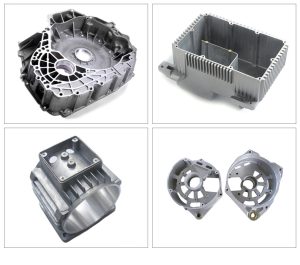
The Die Casting Process
The die casting process involves several key steps, each crucial to producing high-quality metal components:
Preparation: The die is cleaned and prepped to ensure it is free from contaminants.
Injection: Molten metal is injected into the die under high pressure, filling the cavity to create the desired shape.
Cooling: The metal cools and solidifies within the die, adopting its precise form.
Ejection: The solidified part is ejected from the die, ready for any necessary finishing processes.
Advantages of Die Casting
Die casting, facilitated by high-quality dies, offers several advantages:
High Precision and Consistency: Ensures each part meets exact specifications with minimal variability.
Cost Efficiency: The reusability of dies and the high-speed production process reduce overall manufacturing costs.
Material Versatility: Compatible with various metals, including aluminum, magnesium, and zinc, allowing for diverse applications.
Complex Geometries: Capable of producing parts with intricate details and fine features, meeting the demands of modern engineering designs.
Conclusion
In the world of manufacturing, the die is a cornerstone of the die casting process. Its precision, durability, and efficiency make it an essential tool for producing high-quality metal components. Understanding the role of the die in die casting highlights the sophistication and ingenuity behind this vital manufacturing technique.